
How to Compare Odoo Implementation Proposal Options
Selecting the right partner for your business transformation is a critical decision. When you receive an Odoo implementation proposal, the sheer number of variables can be overwhelming. Comparing different quotes requires a strategic approach to ensure you aren’t just looking at the bottom line, but at long-term value.
Many businesses fall into the trap of choosing the lowest bidder. However, ERP projects often fail due to scope creep or hidden costs. In this guide, we will walk you through seven essential steps to evaluate your options effectively.
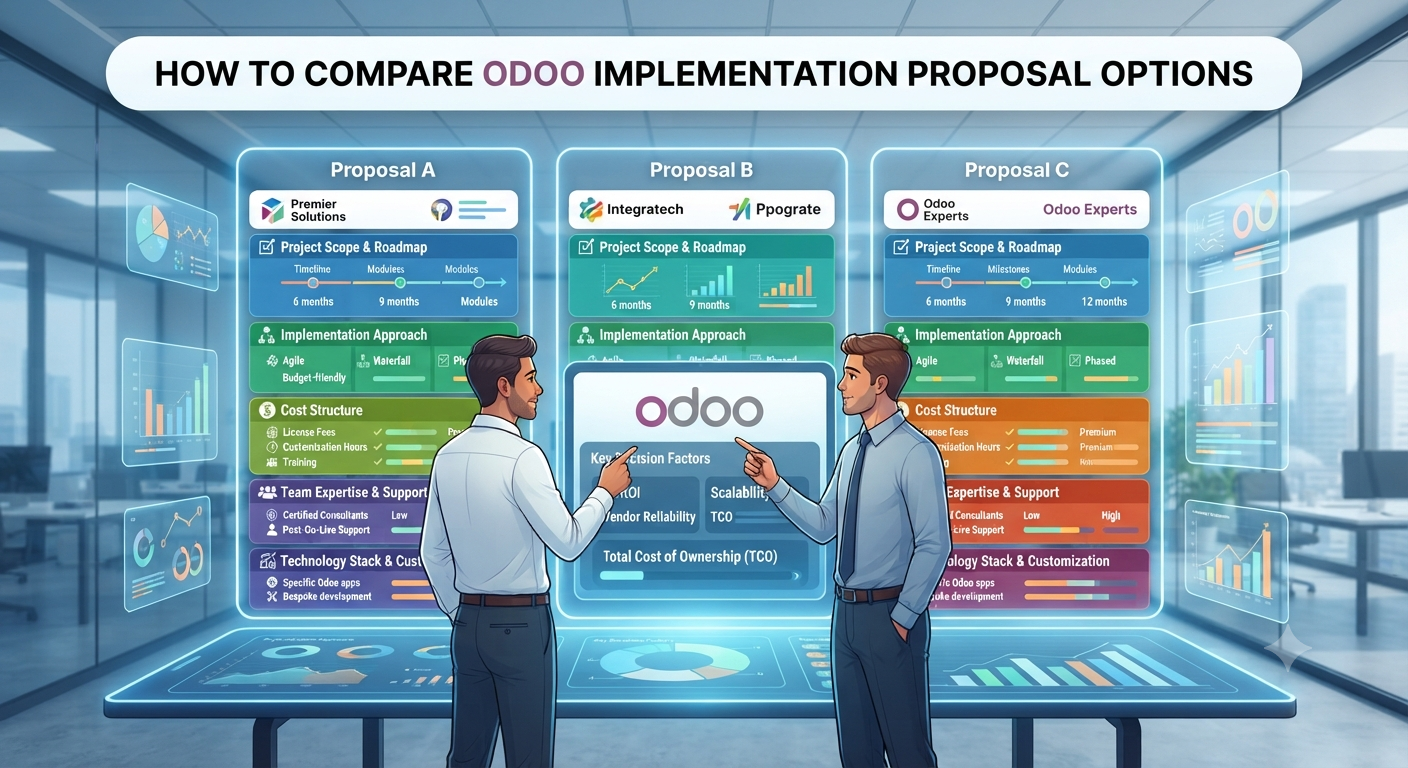
Understanding Your Odoo Implementation Proposal
Not every partner approaches development in the same way. Some prioritize custom coding, while others focus on standard Odoo features. It is vital to understand the difference between Enterprise Resource Planning strategies to ensure your system remains upgradeable.
When you look at each proposal, analyze the breakdown of hours. Are they charging for project management, data migration, and training separately? A transparent partner will provide a clear line-item breakdown so you can identify exactly where your budget is being allocated.
Why Comparing an Odoo Implementation Proposal Matters
Price, expertise, and methodology are the three pillars of a successful evaluation. If a proposal seems significantly cheaper, verify if the vendor is using local developers or outsourced resources. You must balance initial costs against the long-term support required for a complex system.
Consider how the vendor handles Odoo customization versus configuration. Custom code is more expensive to maintain during version upgrades. A partner who prioritizes standard workflows often delivers more sustainable results for growing companies.
Key Metrics for Evaluation
First, evaluate the project scope. Does the document explicitly state what is included and, more importantly, what is excluded? Vague scopes are the primary reason for cost overruns in the ERP industry. Ensure every major module requirement is documented.
Second, assess the vendor’s industry experience. Have they worked with companies of your size? An Odoo partner with expertise in your specific sector will understand your unique regulatory requirements and operational bottlenecks better than a generalist.
Third, review the project management methodology. Will you have a dedicated account manager? How will they handle communication during the development phase? Regular updates are non-negotiable for project transparency.
Evaluating Post-Go-Live Support
The implementation is only the beginning. You need to know how the partner handles support tickets after launch. Look for details on service-level agreements (SLAs) regarding response times and bug fixes.
Some partners offer retainer packages, while others charge per hour. Determine which model suits your internal technical capabilities. If you lack an in-house IT team, a comprehensive support plan is worth the extra investment.
Final Decision Checklist
Before signing, ask for references. Speak to previous clients who were in a similar position as your organization. Ask them if the final invoice matched the initial estimate and if the implementation stayed on schedule.
Remember, the goal is a long-term partnership, not just a transaction. If a vendor is willing to take the time to explain their proposal in detail and answer your tough questions, it is a sign of a high-quality partner. Choose the vendor that aligns with your culture and long-term business goals.


One Response